
1. Vokatra mihoatraview
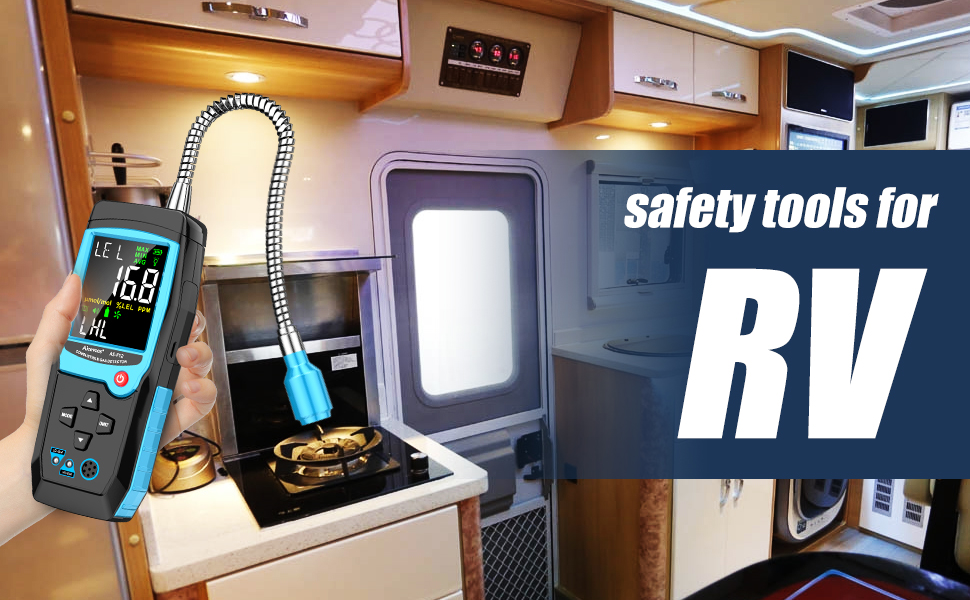
The Aicevoos F12 Natural Gas Detector is a portable device designed for accurately locating leaks of various combustible gases. It features a flexible probe, real-time LCD display, and audible and visual alarms to ensure safety in residential and recreational vehicle (RV) environments.
Lafin-javatra fototra:
- Effective Gas Leak Detection: Accurately locates leaks of combustible gases such as methane, natural gas, propane, LPG, and gasoline.
- Fitaovana fandrefesana vozon'akoho azo ovaina: A 17-inch (approximately 1.18 ft) bendable probe allows access to hard-to-reach areas.
- Light, Audible, and Visual Alarm: Provides rapid detection (as fast as 0.5 seconds) with sound, light indicators, and a backlit LCD screen for clear gas concentration readings.
- Fahatsapana azo ahitsy: High and low sensitivity settings for more accurate detection.
- Asa mora ampiasaina: Includes an automatic shut-off feature after 10 minutes of inactivity to conserve battery life.

2. Information momba ny fiarovana
FAMPITANDREMANA: This device is a leak detector and not a substitute for proper safety procedures. Always ensure adequate ventilation when investigating gas leaks. If a strong gas odor is present or a significant leak is suspected, immediately evacuate the area, contact your gas provider or emergency services, and do not operate any electrical devices.
Potential Hazards of Combustible Gas Leaks:
- fipoahana: Accumulation of combustible gas can lead to explosive conditions.
- Afo: Gas leaks can ignite, causing fires.
- Dizziness & Health Issues: Inhaling gas can cause dizziness, nausea, and other serious health problems.
3. Fametrahana
3.1. Fametrahana bateria
The Aicevoos F12 detector requires 3 AAA batteries for operation. Ensure batteries are inserted with correct polarity.

3.2. Initial Warm-up
After turning on the device, allow approximately 20 seconds for the sensor to warm up and stabilize. The device will display a countdown during this period. During warm-up, ensure the detector is in a clean air environment to establish a baseline reading.
4. Torolàlana miasa
4.1. Power On/off
Press and hold the power button (usually red) to turn the device on or off. The device will initiate a warm-up sequence upon powering on.
4.2. Fikarohana entona
- After warm-up, the device is ready for detection. The LCD will display 'LEL' and 'PPM' (parts per million) readings, typically starting at 0 in clean air.
- Direct the flexible gooseneck probe towards the area where a gas leak is suspected. Move the probe slowly along pipes, connections, and appliances.
- The device will provide audible beeps, visual light indicators (low alarm/high alarm LEDs), and an increasing concentration reading on the LCD if gas is detected. The alarm intensity increases with higher gas concentration.
4.3. Interpreting the Display and Alarms
- LEL: Lower Explosive Limit, indicating the percentage of gas in the air that is flammable.
- PPM: Parts Per Million, a measure of gas concentration.
- Fanairana azo henoina: Beeping sound, increasing in frequency with higher gas levels.
- Fanairana hita maso: Flashing LEDs (yellow for low alarm, red for high alarm) and a backlit LCD display.

4.4. Adjusting Sensitivity and Alarm Levels
The device allows adjustment of alarm thresholds. Use the 'MODE' and arrow buttons to navigate through settings and adjust the low (AL1) and high (AL2) alarm levels in PPM. Refer to the manual's technical specifications for recommended safe limits.
5. Fikojakojana
5.1. Fanadiovana
Wipe the device with a soft, dry cloth. Do not use abrasive cleaners or solvents, as these can damage the casing na sensor.
5.2. Fanoloana bateria
When the battery indicator on the LCD shows low power, replace the 3 AAA batteries promptly to ensure accurate readings and continuous operation.
5.3. fitahirizana
Store the detector in its protective case in a cool, dry place away from direct sunlight and extreme temperatures. Remove batteries if storing for extended periods.
6. Famahana olana
6.1. No Reading or Inaccurate Readings
- Ensure the device has completed its 20-second warm-up in a clean air environment.
- Jereo ny haavon'ny bateria ary soloy raha ilaina.
- Ensure the sensor probe is clean and unobstructed.
6.2. Fanairana diso
- Verify the detection area is free from any combustible gases or strong fumes (e.g., cleaning products, alcohol vapors).
- Ensure the device was warmed up in a clean air environment.
- Adjust the sensitivity settings if necessary, but always prioritize safety.
6.3. What to do if a Gas Leak is Detected
- Do Not Panic: Tony foana.
- ventilate: Open windows and doors to air out the area.
- Turn Off Gas Supply: If safe to do so, turn off the main gas supply valve.
- Mifindra toerana: Immediately leave the building or RV.
- Contact Authorities: From a safe location, call your gas provider or emergency services. Do not use phones or electrical switches inside the affected area.
7. Famaritana
| endri-javatra | famaritana |
|---|---|
| Marika | Aicevoos |
| MODELY | F12 |
| Loharanon-kery | Battery Powered (3x AAA Batteries) |
| Lanja entana | 1.54 kilao |
| Karazana fanairana | Audible, Visual |
| Fandrefesana Range | 0-100% LEL |
| Hery famahana | 0.1% LEL |
| Fotoam-pamaliana | 0.5-3 segondra |
| Halavan'ny Probe | 17 inches (approx. 1.18 ft) |
8. Warranty sy fanohanana
For warranty information, technical support, or any questions regarding your Aicevoos F12 Natural Gas Detector, please refer to the contact information provided in the product packaging or visit the official Aicevoos website. The product typically includes a user manual with detailed support contacts.
If you have any questions or concerns, please feel free to contact Aicevoos customer service.